Trying to make sense of the Ada housing market right now? You are not alone. Prices and timelines have shifted, and each website you check seems to tell a slightly different story. The good news is you can still buy or sell confidently when you understand what the latest numbers mean for your goals. In this guide, you will see where prices stand, how fast homes are moving, where the inventory sits by price range, and what steps to take next. Let’s dive in.
Ada prices at a glance
If you look at one snapshot for quick context, use the city’s median listing price. As of December 2025, Ada’s median listing price sits around $249,999. That lines up with what you feel on the ground: most day-to-day activity is happening in the mid-$100s to the mid-$200s.
Two other trusted metrics paint a fuller picture:
- Zillow’s typical home value index is about $174,452 through the end of January 2026, which is up roughly 1.8% year over year.
- Redfin reports a $183,750 median sale price for January 2026, which shows a larger year-over-year gain. In a smaller market like Ada, one month of sales can be a small sample, so percentage changes can swing more than you might expect.
Why the numbers differ:
- Median listing price reflects asking prices of homes currently for sale.
- Median sale price reflects prices of homes that actually closed that month.
- A typical value index smooths out timing and home-type differences, which reduces month-to-month noise.
The takeaway: prices in Ada are stable to slightly up, with the heart of the market centered near $150,000 to $300,000 depending on the property.
How fast are homes selling?
Speed depends on how you measure it. Each platform uses a different yardstick, and that matters.
- Median days to pending (time from list to accepted offer) is about 31 days.
- Median days on market (total time listed) is closer to 56 to 71 days based on recent snapshots.
Sale-to-list price sits close to asking, roughly 97% to 100%. That combination tells you two things:
- Well-priced homes can still attract strong offers that land near list price.
- The market is no longer at a sprint. Expect a few more weeks for marketing, showings, and negotiations.
If you are buying, the 31-day median to pending means clean, fairly priced homes can move quickly, so you should prepare to make decisions within days, not months. If you are selling, plan for a listing period measured in weeks rather than days and price with the comps, not above them.
Where the inventory is: by price range
Active listing counts vary by site, but two snapshots tell the story. One platform shows a little over 200 active listings in the city while another shows closer to 130 at the end of January 2026. The difference comes from how each site pulls listings. Even with that spread, the pattern by price is consistent:
- Under $100,000: Limited but present. Mostly smaller homes, fixers, or land.
- $100,000 to $200,000: A measurable share of active listings and recent sales. Important for first-time buyers and investors.
- $200,000 to $300,000: The core of Ada’s market. Many move-in-ready single-family homes live here.
- $300,000 to $500,000: Smaller but steady supply. Newer builds and larger homes appear here.
- Over $500,000: Limited selection, often acreage or higher-end rural properties.
For precision on the day you make a decision, have your agent pull a current MLS snapshot by price band. In smaller markets, these bands can shift week to week as new homes list and others go under contract.
What this means if you are buying your first home
You have options, especially between $100,000 and $200,000, but the best turnkey homes in any band still draw attention. Here is how to put yourself in a winning position:
- Get pre-approved before you tour. In a market where good homes can go pending in about a month, serious offers need financing ready.
- Watch for fair pricing and clean condition. If a home is priced in line with recent sales, aggressive low offers risk being passed over.
- Structure a strong but sensible offer. Consider a competitive earnest deposit, clear inspection timelines, and a closing date that fits the seller’s move.
- Use a local CMA to confirm value. Price-to-list is running close to 97 to 100 percent. Your analysis should focus on current comps, not last year’s extremes.
If you are exploring USDA, FHA, VA, or other financing options, factor in appraisal and condition standards early. A well-planned path to closing helps you move quickly when the right house appears.
What this means if you are moving up
You may find more breathing room to shop than during the fastest months. Still, timing matters if you need to sell before buying.
- Sequence your sale and purchase. With days on market often stretching beyond a month, plan for overlap. Bridge options or right-to-sell contingencies can help.
- Price your current home with intent. Properties that launch at the right number capture early energy and reduce the risk of later price cuts.
- Target your next-home search strategically. The $200,000 to $300,000 bracket has a wide selection, but desirable features can compress timelines. Keep financing and logistics aligned so you can say yes when the right home hits the market.
What this means if you are selling
This market rewards accurate pricing and clean presentation. Buyers are still paying near asking for homes that show well and align with comps.
- Set a realistic list price. Overpricing tends to extend your time on market and may lead to later reductions. A fresh CMA is essential.
- Max out the first two weeks. Professional photos, tidy curb appeal, decluttered rooms, and clear showing instructions help pull in offers while your listing is new.
- Expect a marketing window of several weeks. Where a year or two ago some homes sold in days, today’s averages point to a 4 to 10 week range depending on price and condition.
- Plan your net proceeds conservatively. Sale-to-list near 97 to 100 percent is a strong signal, but consider concessions and closing costs in your forecast.
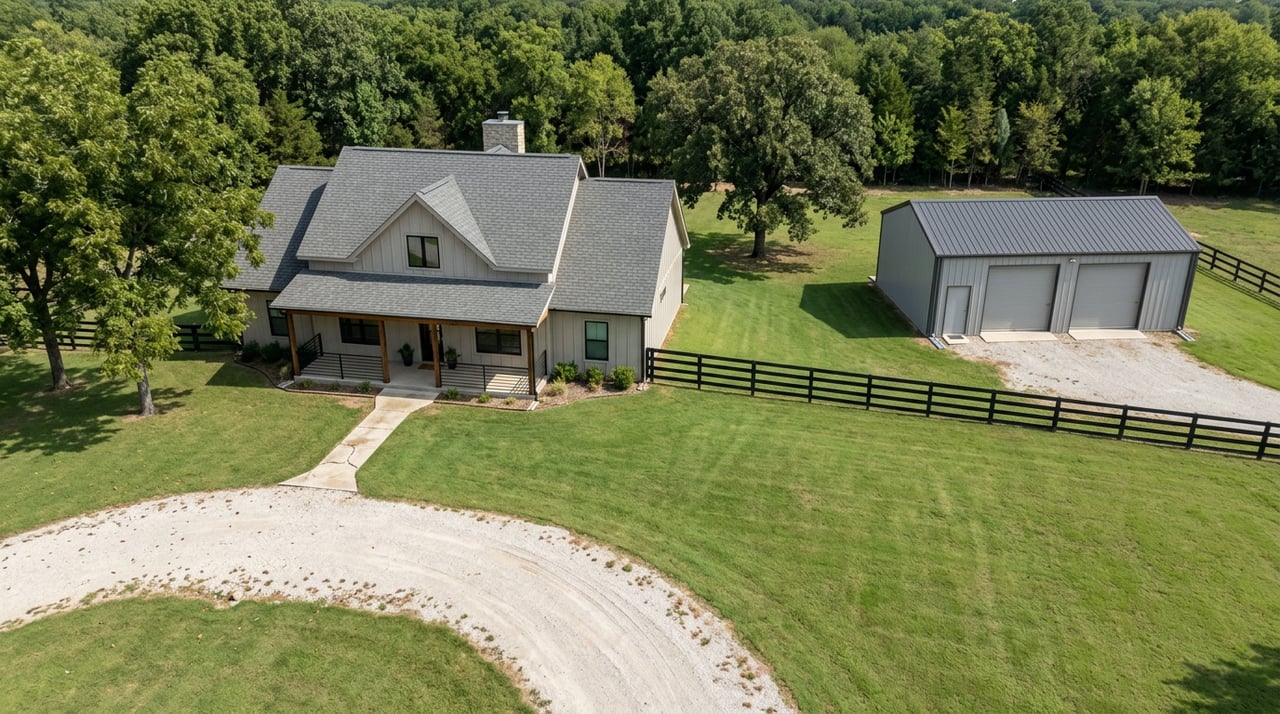
If you have acreage, a shop, or specialized outbuildings, your marketing should showcase those features clearly. In East Central Oklahoma, land, ponds, and utility buildings can change the buyer pool and the value conversation.
Why market numbers do not always match
It is normal to see three different numbers for the same city in the same month. Here is why:
- Different definitions. Days to pending tracks time to an accepted offer. Days on market tracks total live time. Median listing price is not the same as median sale price. A typical value index smooths across home types and timing.
- Different coverage. Not every platform pulls from the same set of MLS feeds or updates at the same time. In small markets, a few sales can shift a median more than you think.
Use these rules of thumb:
- For a quick “what is for sale now” view, look at median listing price and the count of active homes.
- For true market value, use recent closed sales that match your home’s size, location, and condition.
- For speed, check both days to pending and days on market to set expectations for offers and total timeline.
Action steps to buy or sell with confidence in Ada
Whether you are planning your first purchase, a move-up, or a sale, a clear plan saves time and money.
For buyers:
- Get pre-approved with a local lender and understand your monthly payment comfort range.
- Ask for a custom search that narrows to your must-haves, budget band, and target areas.
- Review a CMA before you write so your offer lines up with the newest comps.
- Be offer-ready for well-priced homes that check your boxes.
For sellers:
- Request a current CMA to set the right list price from day one.
- Complete quick, high-ROI fixes: fresh mulch, touch-up paint, light repairs, deep clean, and professional photos.
- Choose a marketing plan that reaches both in-town and acreage buyers if your property fits both.
- Plan showings and decision points in advance so you can respond confidently to strong early interest.
A note for land, ranch, and acreage buyers and sellers
Ada and the surrounding East Central Oklahoma market include a steady flow of rural and recreational properties. If you are buying acreage, factor in surveys, fencing, ponds, well and septic, outbuildings, easements, and access. If you are selling, clear documentation and aerial context help buyers see value quickly. Experienced rural marketing brings the right audience to your gate and can shorten time to a fair deal.
Bottom line for Ada in early 2026
- Prices are steady to modestly higher depending on the metric you use.
- Homes that are priced right are selling near list.
- Expect a listing-to-offer window around one month on average, with total market time often longer.
With a smart plan, you can buy with confidence and sell with clarity in the current Ada market. If you want a fresh read on your specific property or budget, reach out to a local team that tracks these numbers daily and knows how to navigate both in-town houses and rural acreage.
Ready to talk strategy for your home, land, or next purchase? Schedule your free consultation with Daniel Sweeney.
FAQs
Is now a good time to buy a home in Ada in 2026?
- Yes, if you are prepared. There is meaningful inventory in the $100,000 to $200,000 range, but clean, fairly priced homes can go pending in about a month, so get pre-approved and be ready to act.
How long will my Ada home take to sell?
- Plan on roughly 4 to 10 weeks depending on price and condition. Days to pending has hovered near a month, while days on market averages are higher, so total timeline can extend beyond the first offer.
Why do different websites show different Ada price numbers?
- They track different things. Some report asking prices for active listings, others report closed sale prices, and some use a smoothed index of typical values. Small monthly sample sizes also create bigger swings.
Which price range has the most options in Ada right now?
- The core of the market sits around $200,000 to $300,000, with additional selection between $100,000 and $200,000. Under $100,000 and above $500,000 have fewer choices at any given time.
How close to asking price are Ada homes selling for?
- Recent snapshots show sale-to-list ratios around 97 to 100 percent. Well-priced, well-presented homes commonly land near their list price.