Looking at a few acres outside Ada can feel simple at first. You see open space, a place for a shop or barn, maybe room for a garden or a few animals, and it is easy to picture the lifestyle before you dig into the details. The truth is that small-acreage purchases near Ada are usually decided by due diligence, not first impressions. If you know what to check before you close, you can avoid expensive surprises and buy with a lot more confidence. Let’s dive in.
Start With City Limits and Land Use
One of the first things to confirm is whether the property sits inside Ada city limits or outside them. That single detail can affect zoning, setbacks, subdivision rules, and the review process for future improvements.
The City of Ada says its Planning & Zoning division handles land use, zoning, subdivision, annexation, and related development issues. The city also offers a zoning verification request process, which can help you confirm how a parcel is classified and what that means for your plans.
If the property is inside the city, zoning districts matter right away. Ada states that permitted uses and review uses are laid out in Chapter 58 of the city code, and setback requirements can vary by zoning district.
That matters more than many buyers expect. A tract may look big enough for a house, shop, or barn, but the required setbacks for a primary structure may differ from those for an accessory structure, which can change what actually fits on the site.
Read the Title Report Before You Fall in Love
When you buy acreage, the title report deserves just as much attention as the home or land itself. It can reveal issues that are not visible from the road and not obvious during a showing.
Ada recommends reviewing the title report for easements, pre-annexation agreements, liens, deed restrictions, and other encumbrances. The city also notes that its Community Development Department may have plats, easements, and permits on file that help you understand the property more fully.
This is where many hidden problems show up. An easement can affect where you place a driveway, shop, fence, or even part of a future home site.
Ada specifically states that permanent structures cannot be placed in easements. If you are planning improvements, that one detail can shape the whole layout of the property.
Get a Survey, Not Just a Fence Line
On small acreage, fence lines can be misleading. What looks like a boundary may not match the legal property lines.
Ada says it is the owner’s responsibility to determine property lines and that a licensed surveyor is the only accurate way to locate them. The city also notes that a survey is the best way to resolve property-line disputes.
That makes a survey especially important if you want to repair fence, install a gate, add a driveway, or build near an edge of the tract. A few feet can make a big difference when you are working with a smaller parcel.
If there are existing fences, do not assume they were built with the survey in mind. It is smarter to treat the survey as the real map and the fence as something that still needs to be verified.
Check Floodplain and Drainage Early
A pretty piece of land can still have drainage issues that affect how you use it. Low spots, creek crossings, ponds, and soggy areas all deserve a closer look.
Ada’s Community Development Department lists floodplain determination among its services. That makes floodplain review an important early step, especially if a tract has visible water features or areas that hold water after rain.
This is not just about the house site. Floodplain concerns can also affect where you place a shop, barn, driveway, septic system, or other improvements.
Confirm Access and Utility Availability
Never assume a parcel has the services you need just because nearby properties do. Around Ada, utility service can vary from tract to tract.
Ada says water, sewer, and trash service are address-dependent. In other words, you need to verify whether a specific parcel actually has access to city utilities before you count on them.
If the property will require work that affects a road or street, Ada asks residents to contact Public Works. That is worth knowing if your plans include a new entrance or changes that might affect access.
Access matters just as much as utilities. Before closing, make sure you understand how you legally and physically reach the property and whether your intended use depends on improvements that still need approval.
Treat Septic as a Major Buying Decision
If the tract is not connected to municipal sewer, septic feasibility becomes one of the biggest questions in the purchase. Two parcels can look nearly identical and still have very different septic options.
The Oklahoma DEQ says on-site sewage systems are regulated through a two-step process. First, a Report for On-Site Sewage determines what systems are allowed. Then, an Authorization to Construct must be purchased before installation, and the final installation must be inspected and approved before use.
DEQ also says the system type depends on the lot size and shape, residence size, and soil-test results. That means septic is not a box to check later. It is something you want to investigate before you commit.
OSU’s land-buyer septic guidance recommends screening a parcel before purchase and paying close attention to slope, restrictive soil layers, water table depth, flooding or ponding, drainage class, and soil texture. That is why septic feasibility can change so much from one small-acreage tract to the next.
Ask Smart Questions About Private Wells
Private wells are common on rural property, but they come with their own due diligence. If a tract depends on a well, you want to understand both the rules and the practical risks.
DEQ says privately owned wells in Oklahoma are not regulated for water quality by the government in the same way public systems are, so the owner is responsible for making sure the water is safe and adequate. Routine testing is recommended.
The Oklahoma Water Resources Board says a water permit is not required for domestic groundwater use, but permits are required for non-domestic uses. For many small-acreage buyers, that distinction matters.
OWRB defines domestic use to include household purposes, farm and domestic animals up to the land’s normal grazing capacity, and irrigation of up to three acres for gardens, orchards, and lawns. If your plans go beyond that, you need to understand the permitting side before you buy.
It is also smart to ask for recent well test results during contract negotiations if the property already has a private well. DEQ recommends retesting after flooding, land disturbance, repairs, or noticeable changes in odor, color, or taste.
Review Fences, Driveways, and Outbuildings
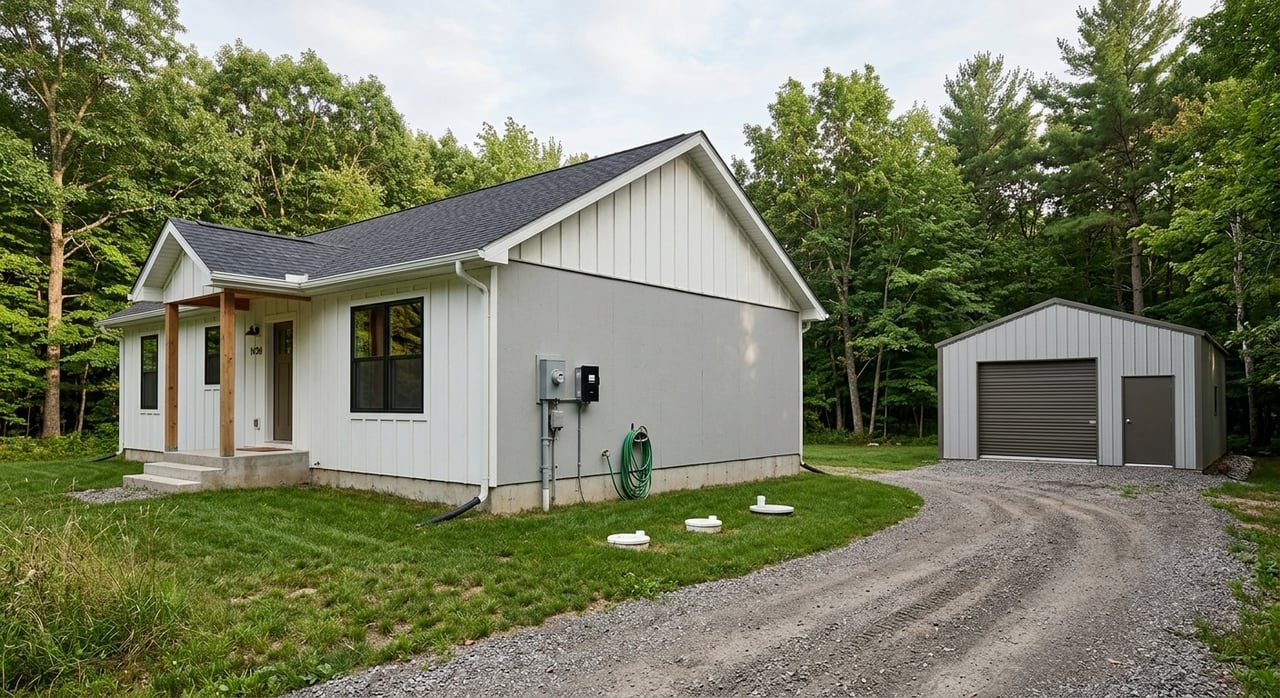
Buyers often focus on the house site and overlook the smaller improvements that make rural land functional. On acreage, fences, driveways, sheds, shops, and barns all need to fit the property’s legal and physical limits.
Ada says easements are areas reserved for the use of others, often utilities, and the holders have access rights for maintenance. Because permanent structures cannot be placed in easements, you will want to review any existing or planned improvements with that in mind.
Setbacks matter here too. Ada says setback distances vary by zoning district, and the required setback can differ for a primary structure versus an accessory structure.
That means a parcel may offer enough total land area, but still be a poor fit for the exact layout you have in mind. This is especially important if your goal is to add a barn, shop, or detached building soon after closing.
If livestock is part of your plan, fence design should match the actual use. OSU notes that permanent fences may be used to mark boundaries or contain livestock, and the right design depends on the fence’s purpose and the animals involved.
Match Financing to Your Real Use
Not every loan fits every type of acreage purchase. The best financing option usually depends on whether you are buying a primary residence, a hobby property, or an actual farm or ranch operation.
For eligible rural areas, USDA Rural Development’s Section 502 Guaranteed Loan Program is geared toward primary residences. USDA says qualified buyers may get 100 percent financing, there is no set acreage limit, and the property cannot be income-producing.
USDA also says that program can cover site-preparation costs such as fences and driveways. That can be useful when those improvements are part of making the property workable from day one.
USDA’s Section 502 Direct program serves low- and very-low-income buyers in eligible rural areas. According to USDA, it is typically a no-down-payment option and can help with purchase, construction, repair, relocation, and site preparation, including water and sewage facilities.
If you are truly buying a farm or ranch, USDA’s Farm Service Agency may be the more relevant path. FSA says direct farm ownership loans can be used to buy or enlarge farms and ranches, while operating loans can be used for livestock, equipment, feed, seed, and supplies.
The key is to match the loan to the property’s actual use, not just the acreage size. A small tract for a primary residence and a small tract intended for agricultural production may point you in two different financing directions.
A Simple Due Diligence Checklist
If you want to buy small acreage near Ada with fewer surprises, keep your process in order. A clear sequence can save you time, money, and frustration.
Here is a practical checklist to use before closing:
- Confirm whether the property is inside Ada city limits
- Verify zoning and setback requirements for your intended use
- Review the title report for easements, liens, deed restrictions, and other encumbrances
- Order or review a current survey from a licensed surveyor
- Check floodplain status if the land has low areas, drainage concerns, a pond, or a creek
- Verify whether city water, sewer, and trash service are actually available to that parcel
- If there is no municipal sewer, investigate septic feasibility early
- If there is a private well, ask for recent test information and understand your intended water use
- Review existing fences, driveways, and outbuildings against easements and setbacks
- Compare financing options based on whether the property is a primary residence, hobby property, or farm purchase
Why Local Guidance Matters
Small-acreage deals can look straightforward on paper, but the details are where buyers either protect themselves or get caught off guard. Around Ada and Pontotoc County, even a modest tract can raise questions about zoning, easements, septic, wells, access, and financing.
That is why local experience matters. When you work with a team that understands rural property, local process, and the pace of land transactions in East Central Oklahoma, you have a better chance of spotting issues early and moving forward with confidence.
If you are considering buying small acreage near Ada, Daniel Sweeney can help you evaluate the property, line up the right questions, and make your next move with clarity.
FAQs
What should you check first when buying small acreage near Ada?
- Start by confirming whether the parcel is inside Ada city limits, then verify zoning, allowed uses, setbacks, title issues, and survey details.
Why is a survey important for acreage near Ada?
- Ada says a licensed surveyor is the only accurate way to locate property lines, which helps you verify boundaries before changing fences, adding gates, or building improvements.
How do you know if a small-acreage parcel near Ada can have a septic system?
- You need to investigate septic feasibility before closing because DEQ says system type depends on lot size, residence size, and soil-test results, along with site conditions such as slope and drainage.
What should you ask about a private well on rural property near Ada?
- Ask for recent test results and clarify how you plan to use the water, since DEQ recommends routine testing and OWRB treats domestic and non-domestic groundwater use differently.
Can you use a USDA loan to buy acreage near Ada?
- You may be able to if the property is in an eligible rural area and will be your primary residence, because USDA’s Section 502 programs are designed for qualifying homebuyers rather than income-producing property.
What financing fits a farm or ranch purchase near Ada?
- If the property is truly being bought as a farm or ranch, FSA loan programs may be more relevant than standard rural housing loans, depending on the property’s actual use.