If you are shopping for a home with a few acres around Ada, the financing can look simple at first and feel more complicated once the lender starts reviewing the property. That is normal. Homes on larger lots in Pontotoc County often get a closer look because the lender and appraiser need to confirm the property is still clearly residential. In this guide, you will learn what usually changes, which loan types may fit, and what to check before you make an offer. Let’s dive in.
Why acreage financing is different
Around Ada, a home with acreage is not automatically hard to finance. The main question is whether the property still functions like a typical residential home for the area.
Lenders and appraisers usually look at the site size, current land use, zoning, access, utilities, and nearby comparable sales. If the parcel is typical for the local market and the home is residential in character, financing is often possible.
The challenge starts when the land begins to look more like agricultural property, undeveloped land, or a future land-development tract. In those cases, standard loan programs can become harder to use.
What lenders want to see
For most mainstream financing, the property needs to make sense as a home first. That means the house, land, and improvements should support normal residential living rather than an income-producing operation.
In practical terms, lenders want to see that the acreage is typical for the neighborhood, the home has adequate access, and the utilities are competitive for the area. If the property uses a private well or septic system, those systems need to be viable, and the owner must have the legal right to access them.
If the home sits on a privately maintained road, that can also matter. Conventional lending guidelines generally expect a legally enforceable maintenance agreement for private streets.
Loan options for homes with acreage
USDA loans near Ada
USDA financing can be a strong fit for eligible rural properties around Ada. USDA Guaranteed loans offer 100% financing for qualifying borrowers, which means no down payment is required.
USDA also states there are no set acreage limits for a site with a dwelling. Still, the address must fall within an eligible rural area, and the final property decision is made only after a complete application is reviewed.
USDA income limits matter too. For the Guaranteed program, borrower income cannot exceed 115% of median household income.
When USDA may fit best
- You want a home outside the city core
- The address appears eligible on the USDA map
- The property is clearly residential in use
- You want a low-cash-to-close option
USDA Direct loans may also help low- and very-low-income buyers in eligible areas. These loans typically do not require a down payment, and the property cannot be designed for income-producing activities.
FHA loans on acreage
FHA financing may work well if the home is residential and the appraisal supports the site. FHA allows down payments as low as 3.5%, which can be helpful if you want flexibility without needing a large upfront cash investment.
One important FHA issue is how the appraiser treats the land. If part of the property could be split off and sold separately as a vacant lot, that extra piece may be treated as excess land, and its value may be excluded from the final appraisal conclusion.
FHA borrowers should also plan for mortgage insurance. That cost belongs in your monthly budget from the beginning.
VA loans for eligible buyers
If you are an eligible veteran or qualified borrower, VA financing can be one of the most flexible options for acreage. VA states that nearly 90% of VA-backed loans are made with no down payment.
VA also does not set a limit on the number of acres a property may have. What matters is whether the property can be supported by comparable sales that sold primarily for residential use.
VA does draw a line around nonresidential value. The appraised value cannot include livestock, crops, farm equipment, or supplies.
Conventional loans on larger parcels
Conventional financing can work very well for acreage properties when the parcel still fits the local residential market. The appraiser must analyze the full site, the neighborhood, and the property’s highest and best use using market evidence.
This is especially important in rural areas where lot sizes and land uses vary from one road to the next. Appraisers with local knowledge are often especially valuable in these assignments.
Keep in mind that if your down payment is under 20%, conventional financing usually includes private mortgage insurance, often called PMI.
Appraisal issues to expect
The appraisal is often where acreage properties either move forward smoothly or hit questions. That does not mean the deal is in trouble. It simply means rural properties need more property-specific analysis than a standard subdivision home.
Appraisers may study neighborhood boundaries, typical site sizes, surrounding land uses, and whether the parcel is consistent with recent sales nearby. In and around Ada, that matters because property types can change quickly from in-town lots to homesites with several acres.
The whole parcel counts
One of the biggest surprises for buyers is that the appraiser usually cannot pretend part of the land does not exist. If the property is one legal parcel, the appraisal generally has to consider the entire site, not just a smaller hypothetical portion.
For example, if a home sits on an unsubdivided 40-acre tract, the lender cannot simply value only 5 acres with the house and ignore the rest. That full-parcel requirement can affect both value and loan eligibility.
Excess land can affect value
Some properties have more land than the market typically expects for a home, and some have land that could be divided and sold separately. That difference matters.
Under FHA guidance, a separable vacant lot under one legal description may be treated as excess land, and its value can be excluded from the final value conclusion. If you are considering a property with multiple lots or unusual boundaries, it is smart to review that early.
Access and utilities matter more
Acreage buyers should expect lenders to pay close attention to how the property functions day to day. Adequate vehicle access, usable utilities, and legal rights tied to those utilities all matter.
If public water or sewer is not available, private systems may still be acceptable, but they need to be viable. This is one reason country properties often need more upfront homework than a house in town.
Barns, shops, and other improvements
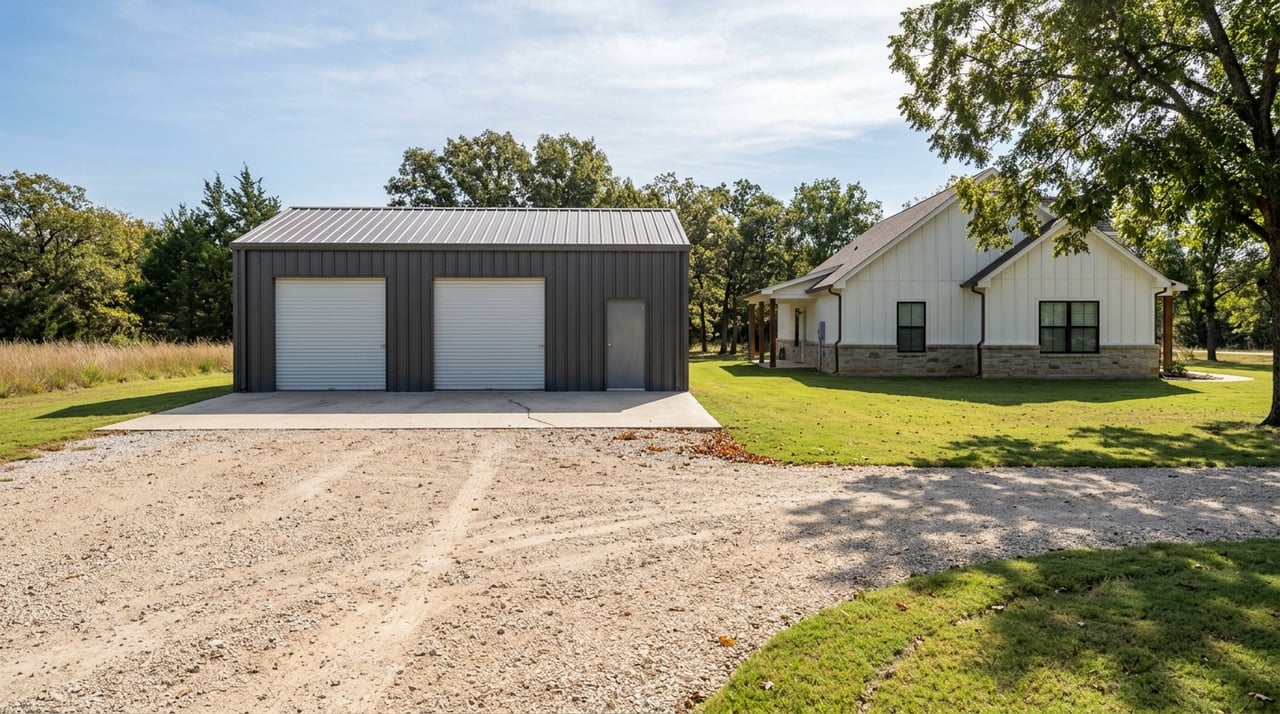
Outbuildings do not automatically create a financing problem. Barns, sheds, corrals, stables, and similar improvements may still fit the appraisal if comparable properties in the area sold primarily for residential use.
The key is whether those improvements support a residential property or push the site toward agricultural or commercial use. That line can be important when you are comparing one acreage listing to another.
What to verify before making an offer
If you want to avoid surprises, do a little extra checking before you get emotionally attached to the property. A few questions up front can save time, money, and stress later.
1. Check USDA eligibility by address
Do not assume a home qualifies for USDA just because it feels rural. USDA eligibility is address-based, and the final answer comes only after a complete application is reviewed.
2. Ask how the land is used
Find out whether the property is purely residential, mixed-use, or agricultural. That one detail can shape whether USDA, FHA, VA, or conventional financing is realistic.
3. Review the survey and legal description
If the property has multiple lots, irregular boundaries, or more acreage than nearby homes, get the survey or legal description early. This can help you spot issues tied to whole-parcel appraisal rules or excess land concerns.
4. Confirm access and utility details
Ask whether the road is public or private, whether there is a maintenance agreement if needed, and how the home is served by water and sewer. Those details can affect both lender comfort and closing timelines.
5. Budget beyond the down payment
The down payment is only part of the story. FHA includes mortgage insurance, conventional loans often include PMI below 20% down, and USDA and VA may come with other fees or lender overlays.
A practical takeaway for Ada buyers
The good news is that many homes with acreage around Ada are financeable. The property usually just needs to behave like a residential home in the eyes of the lender and appraiser.
That means the best acreage purchase is not always the one with the most land. It is often the one with land, access, utilities, and comparable sales that support a smooth loan approval.
If you are comparing country homes, small ranch properties, or larger lots near Ada, local guidance can make the process much easier. A team that understands rural listings, surveys, and appraisal red flags can help you ask the right questions before you commit. When you are ready for straightforward advice on acreage properties around Ada, reach out to Daniel Sweeney to schedule your free consultation.
FAQs
Can you finance a home with acreage around Ada?
- Yes, many acreage properties around Ada can be financed if the home is clearly residential, the site is typical for the area, and the appraisal supports the value.
Does USDA have an acreage limit for homes near Ada?
- USDA says there are no set acreage limits for a site with a dwelling, but the address must be in an eligible area and final property eligibility is determined after a complete application.
Can FHA be used for a house with extra land in Pontotoc County?
- Sometimes, yes. FHA may work if the property is residential, but separable excess land may not be included in the final appraised value.
Are VA loans good for acreage homes near Ada?
- VA loans can be a strong option for eligible buyers because VA does not limit acreage, but the property still needs comparable sales that support residential use.
What is the biggest financing issue with acreage properties?
- The biggest issue is usually whether the property still looks and functions like a residential home rather than an agricultural, undeveloped, or income-producing property.
Should you get a survey before buying a home with acreage around Ada?
- It is often a smart step, especially if the property has multiple lots, unusual boundaries, or significantly more land than nearby comparable sales.